
Why Do I Feel This Way?

Updated: Sep 27
From the book How to Get Calm Before You Lose Your Cool: A Nervous System Guide for Parents, Educators & Kids By Jennifer Dhillon
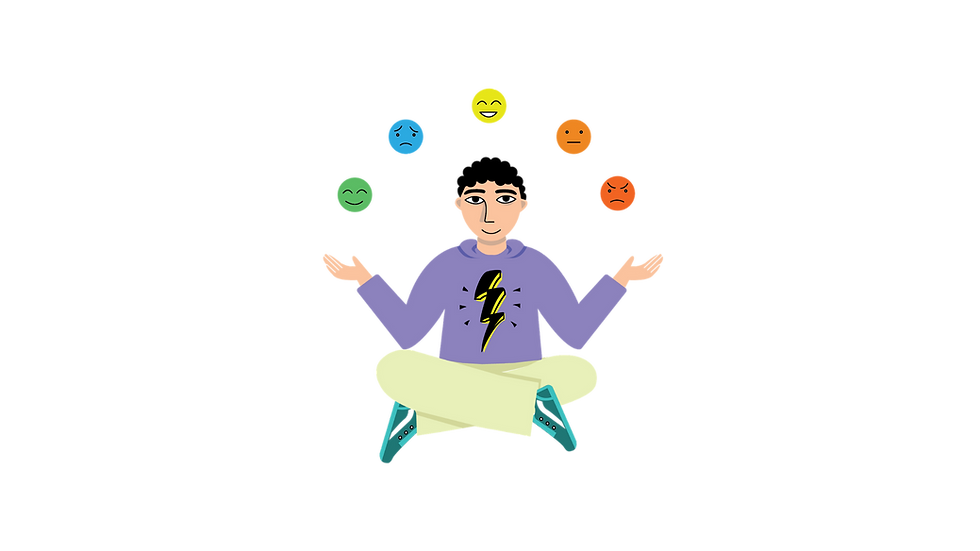
Bounce Back Generation-Juggling Emotions
Excerpt from the Book: How to Stay Calm Before You Lose Your Cool: A Nervous System Guide
We are not born knowing how to regulate our emotions or nervous systems. When we are young, feeling calm, balanced, and ready to play, explore, and build relationships is a learned capacity. It develops slowly over time through relationships with caregivers, experiences, and support when things don't work out.
As babies and children, we rely entirely on caregivers to help us calm down. A soothing voice, a steady presence, and a gentle touch from someone who loves and cares are how the nervous system first learns what it feels like to feel safe.
Some children do not receive enough of this kind of care, which can lead their brains to search for other ways to gain a sense of control or protection in insecure or uncertain environments. But even if we had a bonded and safe caregiving environment, our nervous system is still going to "go off" from time to time.
Why do our brains constantly look for signs that we are safe?
We inherited a nervous system designed for survival in physically dangerous environments.
This system is an ancient evolutionary relic and incredibly effective. It kept our ancestors alive for thousands of years by constantly scanning for threats and reacting quickly when danger appeared. That kind of vigilance was necessary when life involved predators, scarcity of food and other resources, and physical risks. This same nervous system is now operating in a very different world. It worked great when we lived in caves. Less so now, in our fast, complex, and emotionally intense 21st-century life.
We are now living with what I call conceptual fears: fears about what might happen rather than what is happening right now. Concerns about climate change, school shootings, social belonging, and exposure to images of war and violence from across the globe all land on the nervous system as potential threats. We also have complicated social interactions, technology, screens, and economic concerns. Children pick up on these worries and have intense fears about not belonging, being abandoned, and being confused about how things work. They know they are vulnerable in a multitude of ways.
As children grow, they begin to pick up regulation strategies by watching the adults around them and through trial and error. They learn what helps them feel better when they are stressed, overwhelmed, or upset. But what brings temporary relief, such as anger or shutting down, can become dysfunctional.
A child who becomes angry when leaving a favorite playground may become so dysregulated that the anger turns into an hours-long tantrum. A child who is disappointed about not seeing Grandma may feel so deeply disappointed, they refuse to talk and stare at the television for hours.
From an adult perspective, we may think, “What’s the problem? We’ll be back at the park soon.” Or “We can see Grandma next week.” These responses are logical. But for some children, there may be more happening beneath the surface.
What feels like a temporary setback or a lesson in being patient can be interpreted by a child’s nervous system as a moment of intense emotional threat.
Leaving the park may trigger feelings of powerlessness that mirror a lack of control in another area of their life. For example, a child experiencing abuse or bullying, where they have little control over what happens, might translate that same sense of helplessness to lower-stakes situations like being forced to leave the park. For a child who cannot see Grandma, the experience may trigger the past loss of a loved one, reinforcing the belief that people can disappear through death or abandonment.
Our brains and nervous systems are constantly making symbolic connections to help us detect and avoid threats. These connections can be poetic, subtle, hidden from the child's consciousness, and hard for others to see. But they are part of our neurological makeup in an ongoing internal question: “Am I safe?”
By young adulthood, most people have developed a familiar set of coping strategies. Some provide temporary relief, such as yelling, shutting down, seeking stimulation, or distraction. Others might play a game of basketball, talk with friends, or pick up a creative project. Some will use aggression, substance use, or dissociation to gain a short-term escape.
We build patterns in our behaviors. Repeated experiences, stressors, and coping responses shape the brain and nervous system, laying down habits that may last a lifetime…for better or for worse.


Comments